(no subject)
Saturday, August 8th, 2026 09:32 am![[personal profile]](https://www.dreamwidth.org/img/silk/identity/user.png) fred_mouse
fred_mouseI'm home. I was going to make a reasonable post here but a) I've discovered that the Hugo voting closes significantly earlier than thought (this has been the second such: I'd originally put the awards presentation date in my calendar; and now I've realised it is noon PDT not midnight PDT) and b) I can't get the create entries page to load correctly, and I'm not gambling on a long post.
Let's get literary
Friday, August 7th, 2026 06:49 pmkiyaTwenty-Two
They want the thrill,
The permission,
Of pretending
To be afraid—
So they say "Man,"
For the joy of their
Rational
Battle.
But only until
A voice asks
For peace
Or sanity.
And then?
They listen
Like they're hearing
A woman.
That's the catch.
You can't ask
The plane
To stop bombing.

Comment on About the Story’s Setting by Mary Catelli
Friday, August 7th, 2026 09:50 pm![[syndicated profile]](https://www.dreamwidth.org/img/silk/identity/feed.png) pcwrede_comments_feed
pcwrede_comments_feedIn reply to Kevin Wade Johnson.
And in prose, you can just TELL people things!
https://writingandreflections.substack.com/p/dumping-with-style
Comment on About the Story’s Setting by Mary Catelli
Friday, August 7th, 2026 09:49 pmpcwrede_comments_feedIn reply to Wolf Lahti.
On the other hand, it is literally as old as the Iliad, so I don’t think it’s going away any time soon.
I’m not re-typing this:
https://writingandreflections.substack.com/p/dumping-the-info
Barrayar coming in Ukraine
Friday, August 7th, 2026 09:14 amlois_mcmaster_bujold_feedJust in... Following up from their edition of Shards of Honor, Ukrainian publisher A Priori will be bringing out Barrayar as well, later this year. They sent me a preview of the cover, which I will share...

There was also an image with the back cover copy and ISBN, but it was alas a pdf which I can't make post. But the ISBN is
978617863346209
No figures on the cover this round -- it mainly indicates "science fiction!" and not much else -- but I also received a file of the interior. I can't read the text, alas, but it has interior black-and-white illustrations of key scenes like an old Analog Magazine serial, quite fun! which makes up for it.
Ta, L.
Oh, I should see if I can link their website...
https://apriori-publishing.com/produc...
posted by Lois McMaster Bujold on August, 07
There was also an image with the back cover copy and ISBN, but it was alas a pdf which I can't make post. But the ISBN is
978617863346209
No figures on the cover this round -- it mainly indicates "science fiction!" and not much else -- but I also received a file of the interior. I can't read the text, alas, but it has interior black-and-white illustrations of key scenes like an old Analog Magazine serial, quite fun! which makes up for it.
Ta, L.
Oh, I should see if I can link their website...
https://apriori-publishing.com/produc...
posted by Lois McMaster Bujold on August, 07
Comment on About the Story’s Setting by Mary Kuhner
Friday, August 7th, 2026 09:59 ampcwrede_comments_feedThe protagonist of my WIS managed to go an entire 6 chapters without ever noticing that Earth is now under a one world government, or that people expect to live to around 120-140, or…a lot of things. She was very insular and very focused on her work. (And then got abducted by aliens, so none of this comes up in the rest of the book either.)
Had a lot of setting work to do when I started book 3, and some of it involved rewriting parts of book 1 when I discovered that, very inconveniently, neither species has anti-gravity and I was going to have to figure out how one rotating ship gets boarders onto another. (Still working on that one. Not the way I wrote it the first time, that’s for sure.)
Stay Where I Can See You, Little Pup!
Friday, August 7th, 2026 10:01 amdaily_otter_feed
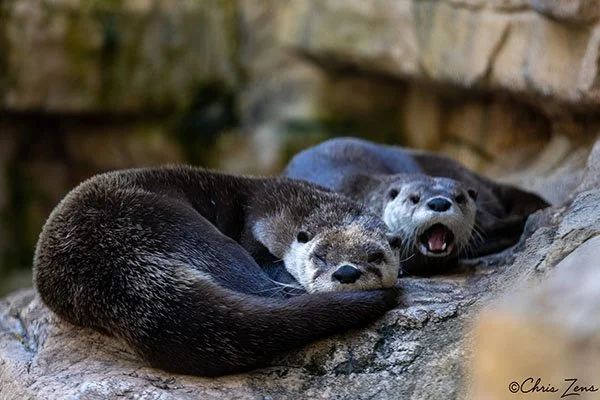
Photo by Ingrid Taylar, via IUCN SSC Otter Specialist Group; Ingrid Taylar writes:
Southern sea otter on a dive buoy/float in Monterey Bay. This mother otter hauled out on a dive buoy while her pup swam nearby. When the pup got too far away, she'd plunge into the bay, grab the little one, swim back to the float, then climb up and leave her pup to play alongside again.
She did this several times before the divers surfaced and took "her" float away. I'm not sure if they saw the otter on the float. She jumped off before they came up.
[Photographed from the shore, at a distance, w/long lens + 1.4x teleconverter]

weighty
Thursday, August 6th, 2026 10:27 pmasakiyume"Tread lightly" is an admonition you can run into here and there. Weighty things can change the shape of the universe. To use the image in "Herkimer Inquiries" (a great story; thanks for the rec, sovay), they're like bowling balls on a mattress.
I sometimes think about that in the context of interactions with people. How weighty people leave impressions on others. Which is also reminding me of the expression in Japanese 影が薄い (kage ga usui), for the opposite phenomenon, literally, to have a pale or watered-down, weak shadow, meaning to not make much impression, to be kind of tenuously fastened to existence. Weighty people, by contrast, leave marks wherever they go.
So when I saw these hollows (filmed with wakanomori's foot for size comparison) in a river rock, that's what a thought of. Some weighty person was walking by, their feet sinking into the rock like mine or yours sink into mud.

sovay), they're like bowling balls on a mattress.I sometimes think about that in the context of interactions with people. How weighty people leave impressions on others. Which is also reminding me of the expression in Japanese 影が薄い (kage ga usui), for the opposite phenomenon, literally, to have a pale or watered-down, weak shadow, meaning to not make much impression, to be kind of tenuously fastened to existence. Weighty people, by contrast, leave marks wherever they go.
So when I saw these hollows (filmed with wakanomori's foot for size comparison) in a river rock, that's what a thought of. Some weighty person was walking by, their feet sinking into the rock like mine or yours sink into mud.
The Friday Five for 7 August 2026
Thursday, August 6th, 2026 09:26 pmanais_pf posting in ![[community profile]](https://www.dreamwidth.org/img/silk/identity/community.png) thefridayfive
thefridayfive1. How often do you change the sheets on your bed?
2. If you had daily maid service, how often would you want the sheets changed?
3. How many pillows are on your bed?
4. How many pillows do you actually sleep on?
5. How many blankets and/or comforters and/or other bed coverings do you have on your bed?
Copy and paste to your own journal, then reply to this post with a link to your answers. If your journal is private or friends-only, you can post your full answers in the comments below.
If you'd like to suggest questions for a future Friday Five, then do so on DreamWidth or LiveJournal. Old sets that were used have been deleted, so we encourage you to suggest some more!
**Remember that we rely on you, our members, to help keep the community going. Also, please remember to play nice. We are all here to answer the questions and have fun each week. We repost the questions exactly as the original posters submitted them and request that all questions be checked for spelling and grammatical errors before they're submitted. Comments re: the spelling and grammatical nature of the questions are not necessary. Honestly, any hostile, rude, petty, or unnecessary comments need not be posted, either.**
2. If you had daily maid service, how often would you want the sheets changed?
3. How many pillows are on your bed?
4. How many pillows do you actually sleep on?
5. How many blankets and/or comforters and/or other bed coverings do you have on your bed?
Copy and paste to your own journal, then reply to this post with a link to your answers. If your journal is private or friends-only, you can post your full answers in the comments below.
If you'd like to suggest questions for a future Friday Five, then do so on DreamWidth or LiveJournal. Old sets that were used have been deleted, so we encourage you to suggest some more!
**Remember that we rely on you, our members, to help keep the community going. Also, please remember to play nice. We are all here to answer the questions and have fun each week. We repost the questions exactly as the original posters submitted them and request that all questions be checked for spelling and grammatical errors before they're submitted. Comments re: the spelling and grammatical nature of the questions are not necessary. Honestly, any hostile, rude, petty, or unnecessary comments need not be posted, either.**
Comment on About the Story’s Setting by Kevin Wade Johnson
Thursday, August 6th, 2026 07:34 pmpcwrede_comments_feedIn reply to Mary Catelli.
Definitely!!
I remember turning to the first page of, I think, Pride and Prejudice. (This was a while ago – but it was definitely Jane Austen.) I was expecting, basically, Georgette Heyer only more so…and it was all dialog. Dialog. No description!
Then I realized her readers wouldn’t need any, the setting and everything else was completely familiar. Oh…
Comment on About the Story’s Setting by Mary Catelli
Thursday, August 6th, 2026 06:53 pmpcwrede_comments_feedI’ve revising a story in which the heroine, to my relief, has a reason to sit down with a history and a map.
Comment on About the Story’s Setting by Mary Catelli
Thursday, August 6th, 2026 05:22 pmpcwrede_comments_feedIn reply to LizV.
Especially when this is all second nature to your character as well
Comment on About the Story’s Setting by LizV
Thursday, August 6th, 2026 02:53 pmpcwrede_comments_feedThis can be especially challenging when the writer knows a setting well, but readers may not. I’m currently writing a story set in the American heartland, in farm country. How much does the average reader know about farming? Based on conversations with some of my city-bred friends, not a lot. (When we bought our house, friends thought we could just nip across the road and help ourselves to corn-on-the-cob from the field there. Aside from the fact that that’s someone else’s property, they’d never realized that the “sweet” on the signs for roadside sweet corn stands meant it was a different variety than the feed corn we’d moved next to. Corn was corn, they thought.) The ways of tractors and plowing are mysteries that they don’t even realize exist. I’m no expert, but I grew up around it, so I’m constantly having to stop and check: does this make sense to someone who didn’t?
This is a Good Book Thursday: So how do we feel about prequels?
Thursday, August 6th, 2026 08:49 amarghink_jennycrusie_feedI ask because Bob just wrote a brilliant novella prequel for the Lavender series, about Vince and Rain in Afghanistan, and it’s brilliant. Completely reversed my previous feeling about prequels. Although not prologues. Really, go read Red Rain, it’s terrific.
And if it’s August 6th when you are, Jodi Taylor’s sequel to Smallhope and Pennyroyal, A Family Affair, just dropped. And that’s what I’ll be reading tonight.
So what good book did you read this week?
Otter Rejects the Pool for Real Water
Thursday, August 6th, 2026 10:36 amdaily_otter_feed

Thanks, Ian! Ian took these photos in Cape Town, South Africa - he writes:
We followed this one along with a canoe from the local wildlife protection team.
There are canals near the waterfront with some rather nice residences with pools next to them.
This otter had been exploring the pool at this residence and was coming out of the gate to go back in the canal.
South African otters are big!
Comment on About the Story’s Setting by Auri
Thursday, August 6th, 2026 10:03 ampcwrede_comments_feedOne said in a writing Claes evening: “Elisabeth watched fron the Windows of the manor when mist Lingered to garden” well It wasn,t 2023 Finland.
Comment on About the Story’s Setting by Mary Catelli
Thursday, August 6th, 2026 04:53 ampcwrede_comments_feedSometimes you have to juggle things to get the right elements in. One of the best examples I have see of it was the dazzled heroine arriving at court for the first time, at dinner. One prince arrived late — thus giving her a reason to pick him out despite the general splendor.
Comment on About the Story’s Setting by Mary Catelli
Friday, August 7th, 2026 10:10 pmPosted by Mary Catelli
https://pcwrede.com/pcw-wp/about-the-storys-setting/#comment-63195
https://pcwrede.com/pcw-wp/?p=13018#comment-63195
In reply to Rick Ellrod.
OTOH, you do have to deal with that character’s presence thereafter.
https://pcwrede.com/pcw-wp/about-the-storys-setting/#comment-63195
https://pcwrede.com/pcw-wp/?p=13018#comment-63195